SHCHEDRYK (Bountiful, Generous) chant or CAROL OF THE BELLS
On the New Year’s Eve Ukrainians start celebrate the coming of the New Year by sing SHCHEDRYK, known around the world as CAROL OF THE BELLS. SHCHEDRYK is a former Ukrainian folk chant sung by pre-Christian Ukrainians to celebrate the New Year which, at that time, started in March. The song is about a swallow arriving to announce that the new year will be bountiful with livestock and prosperity. After the introduction of Christianity, the New Year date was moved to January, and the chant has been sung in the middle of winter ever since. In 1918 when Ukraine proclaimed its independence from the Russian empire, Mykola LEONTOVYCH, arranged the chant to be performed by the Ukrainian National Chorus on their world tour promoting Ukrainian identity and culture. Leontovych wrote several versions of the chant (for mixed choir, women’s choir and for children’s choir), but it is the mixed choir version that remained the most popular one. In 1919 the Ukrainian National Chorus started their world tour showcasing a distinct Ukrainian identity separate from Russia. Leontovych’s music was viewed as a powerful tool for cultural diplomacy. He became deeply involved in the Ukrainian independence movement. This was viewed as subversive by Russians at the time when Ukraine was defending its independence from Russia. In 1921 he was killed in his own home by a man posing as a Russian special service agent.
The Ukrainian National Chorus continued their world tour after Leontovych’s assassination, and made it to the Carnegie Hall in the New York City in October of 1922. The song became very popular, and an American composer of Ukrainian origin Peter Wilhouvsky, who worked for the NBC radio symphony orchestra, re-arranged the song for the full orchestra. He also wrote his own lyrics in English, calling it “Carol of the Bells”. It premiered during the Depression era giving people hope amid turmoil. Finally, Wilhousky copy-righted his version in 1936 despite the fact that the song was first published in Ukraine almost two decades earlier.
Here we post several versions of the Carol of the Bells, a.k.a. SHCHEDRYK, for your enjoyment.
RECLAIMING UKRAINE’S CULTURAL HERITAGE: VLADIMIR DYCK, COMPOSER
VLADIMIR DYCK was born in Odessa on March 19, 1882 in a Jewish family. His musical talent was noted by the famous Russian composer Nikolai Rimsky-Korsakov and on his advice the 17 year old Vladimir was sent to Paris by his parents to study at the Paris National conservatory of Music. He was accepted as a student and in 1904 he received a First Prize in Antoine Taudou’s harmony class.
At that time Ukraine was a part of the Russian Empire. Hence Dyck’s first name was spelled in a Russian way Vladimir instead of the Ukrainian Volodymyr. In 1905 a wave of ruthless anti-Jewish pogroms swept through Southern Russia (read Ukraine). In Odessa around 400 jews and 100 non-jews were killed (Robert Weinberg, 1992). Some sources believe that Vladimir’s family members were among them. However, Dyck’s grandniece Lisette Mermod and her cousins do not believe that this was the case. They discovered Dyck’s father’s death record of 1902 in the Odessa city Rabbinate records, and the the record of the death of Vladimir’s mother Genia in August 1905. Odessa pogroms took place in October 1905.
The passing away of both his parents and the 1905 Odessa pogroms most likely effected Vladimir personally. He made the decision to never return to Odessa, or to Russia. And his name as an accomplished composer was mostly unknown in his native country until recently.
Vladimir took French citizenship 1910 to participate in the composition competition of the Institut de France. In 1911, he was awarded the “duexieme Second Second Grand Prix de Rome” for his cantata Yanitza.
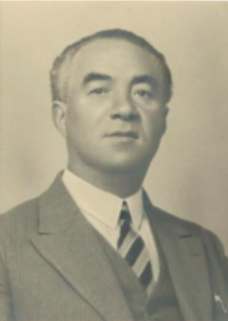
Besides being a piano teacher in Paris, he was also a prolific composer. He wrote in many music genres, including symphonies, instrumental music, songs, and film scores.
Dyck also composed under a pseudonym Dri Mival, an anagram of his first name Vladimir. His later compositions reflected his Jewish heritage, absorbed early in his life during his childhood and youth in Odessa.
On June 10, 1943, Dyck, his wife and daughter were arrested by the Gestapo at his Parisian home. The family was deported to the Auschwitz concentration camp on July 31 and was assassinated a few days later on August 5, 1943.
The composer’s biography remains incomplete, and many of his compositions are still unpublished and unknown. There is very little information about the composer in Ukraine. In Russia the composer is still presented as a Russian composer who couldn’t return back to Russia because of the revolutionary events after 1910 (here). The imperialists will always remain as such.
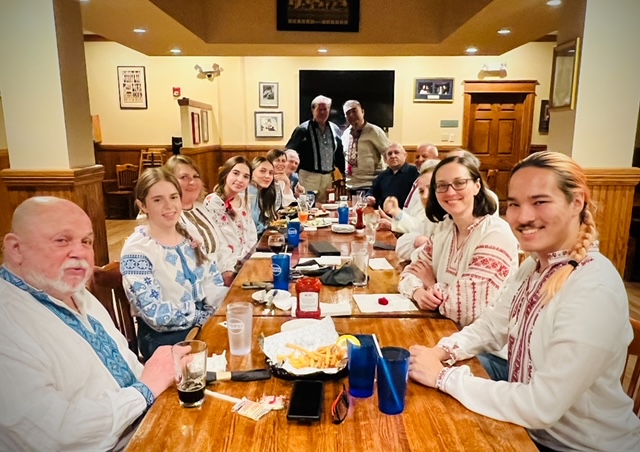
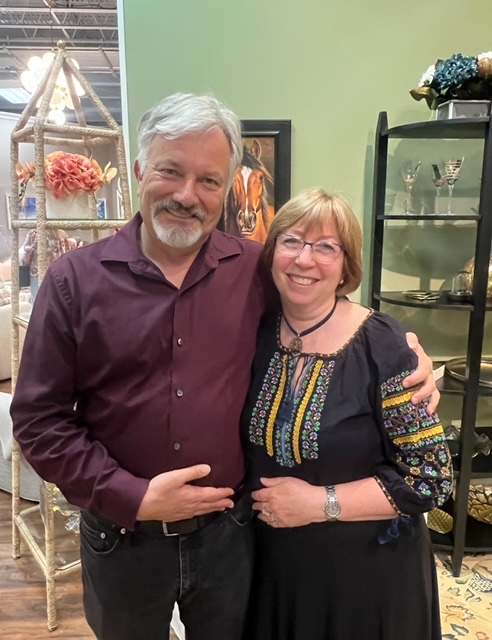
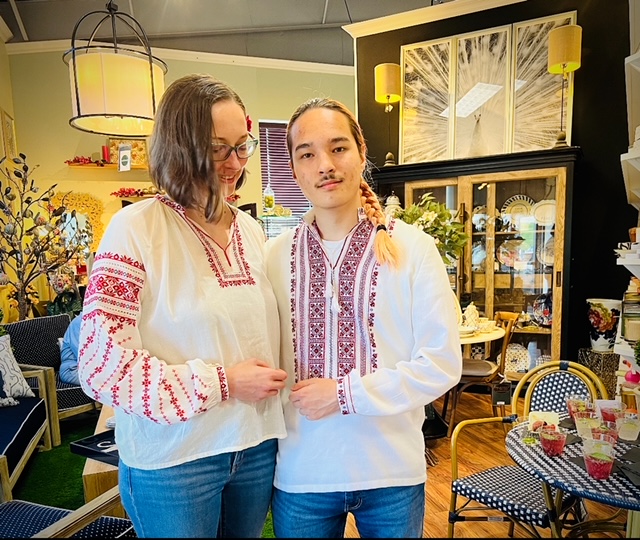
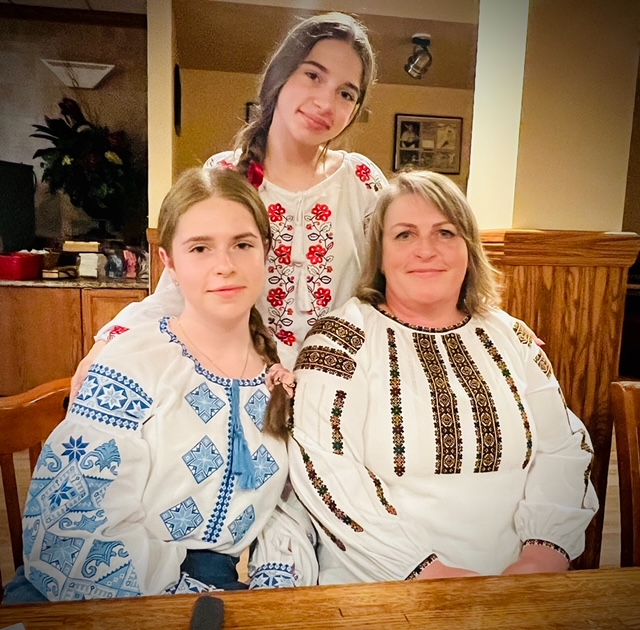
CELEBRATING EMBROIDERED SHIRT DAY IN STATE COLLEGE, PA
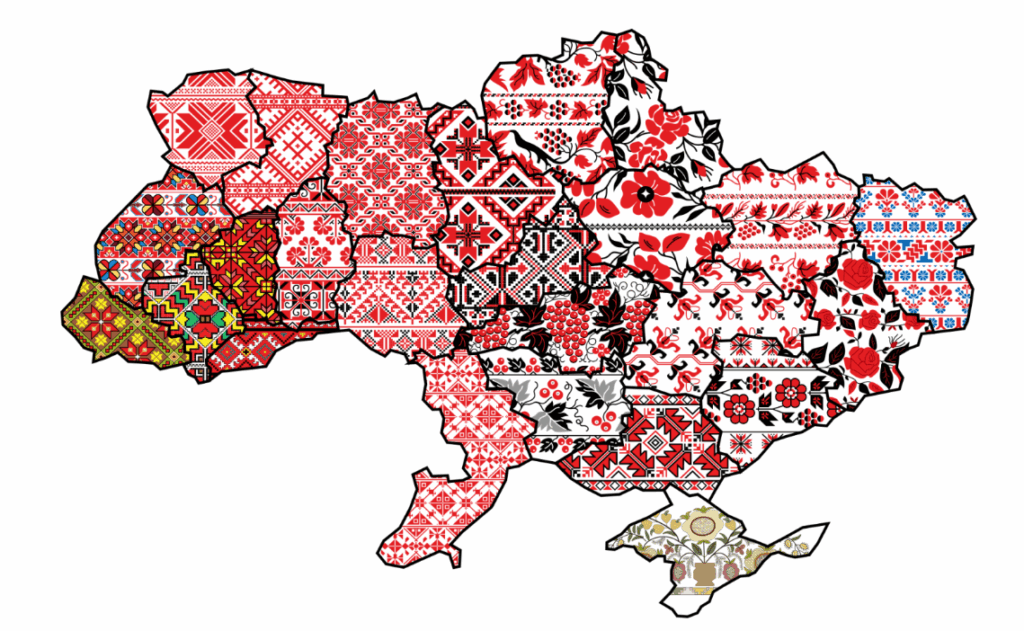
Embroidery is an important part of Ukraine culture. Each region, each village has its own patterns, designs and techniques. Embroidered garments and linen are passed from generation to generation. Many consider them protective omens.
The “map” of embroidery patterns by regions is shown to the right.
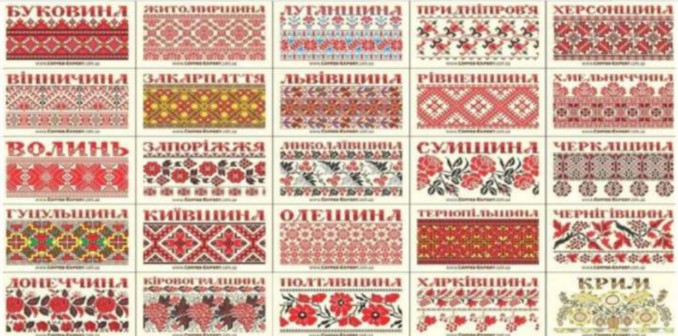

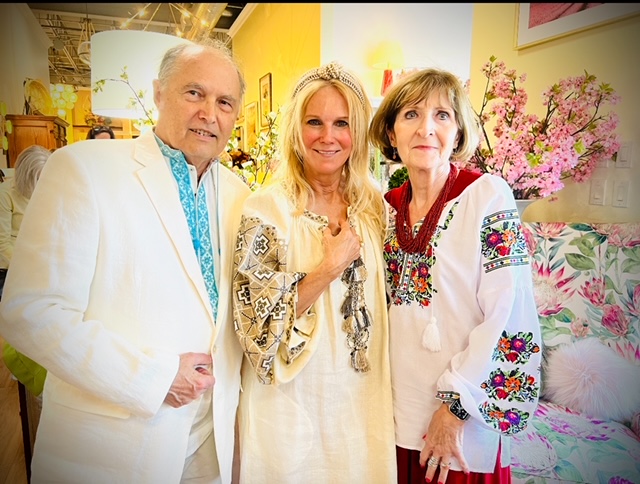
Keeping up the Ukrainian tradition of celebrating the Embroidery Shirt Day. Local residents and the current refugees from Ukraine got together sporting there embroidered garments. And you, as well, can join us next May to celebrate this unique holiday.





UKRAINIAN EASTER EGGS
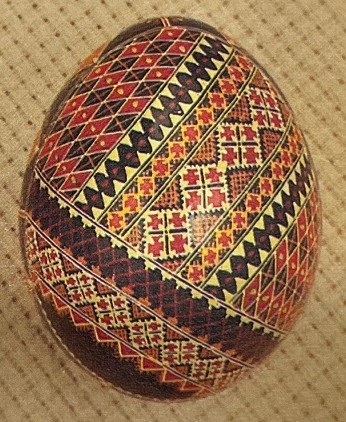
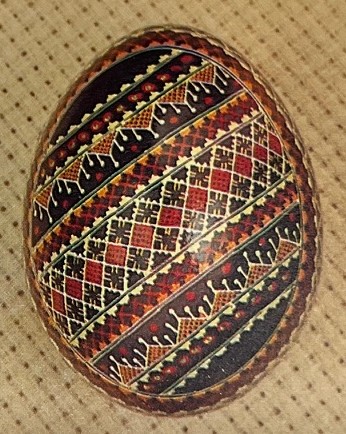
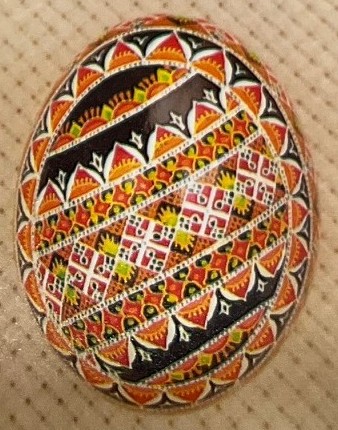
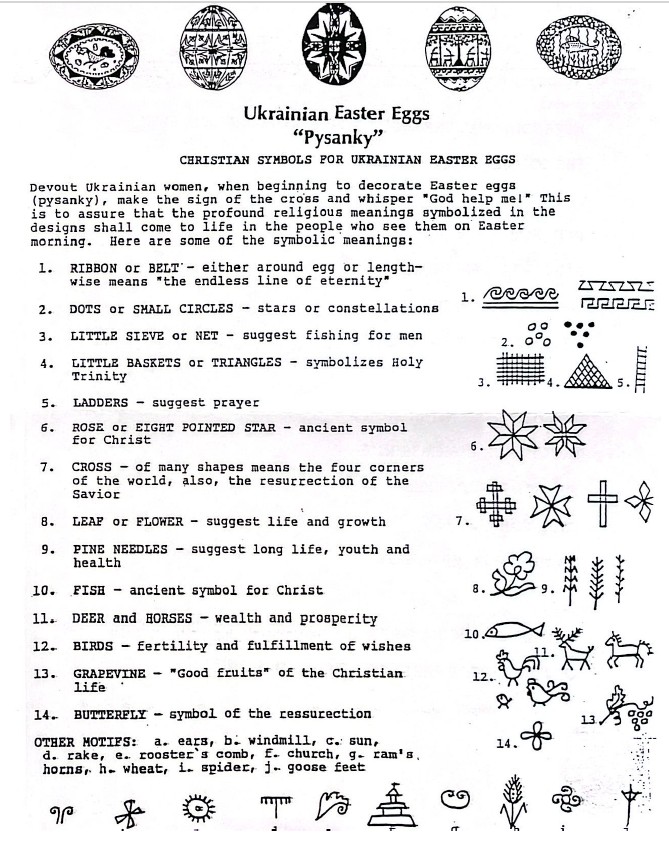
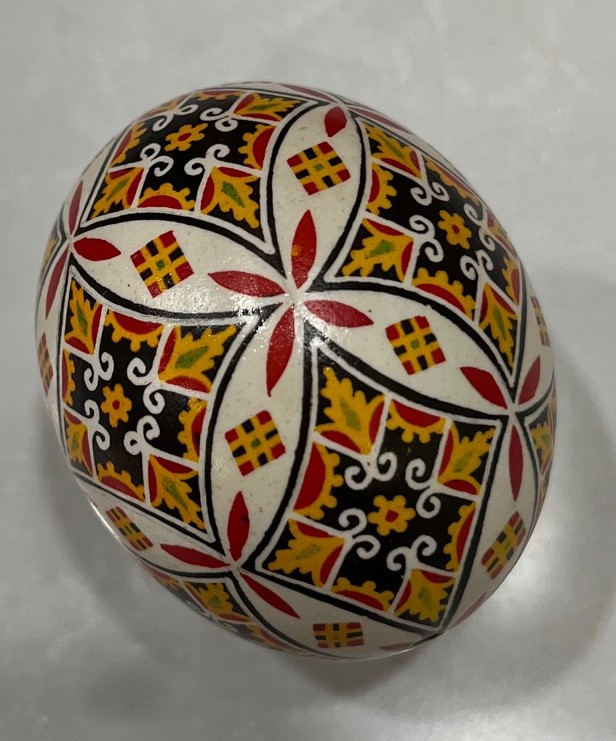
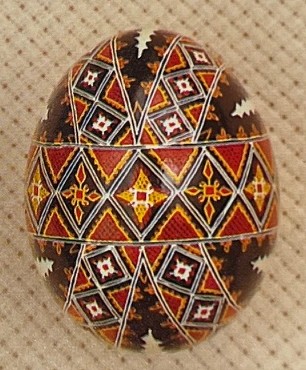
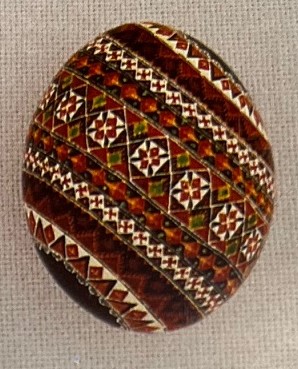
EASTER is the most important holiday for Orthodox Christians in Ukraine. It is shrouded in unique traditions and rituals. One of them is decorating eggs for Easter. Egg, as a symbol of rebirth, is uniquely decorated “telling” a unique story. No wonder that Ukrainian Easter eggs are called “PYSANKY” from the word PYSATY (to write). By using specific symbols with their own meanings, each Easter egg has its own story “written” onto it (please see explanations of Ukrainian Easter egg symbolism to the right).
Even the colors used for Easter egg decorating, have their own meaning: RED for love, BLUE for health, GREEN for growth, YELLOW for spirituality, WHITE for purity ORANGE for attraction, BLACK for remembrance, VIOLET for power, PINK for success, BROWN for happiness.
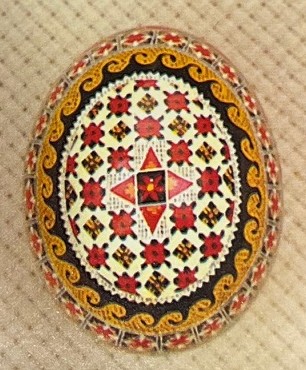
Ukrainian Easter eggs are “written” using melted beeswax which is covering the color that needs to be protected. The egg then dipped into a dye and another melted beeswax layer is “written” to protect the next color, and so on. Finally, the wax is melted over a candle flame and wiped off from the egg revealing a multitude of colors and patterns.